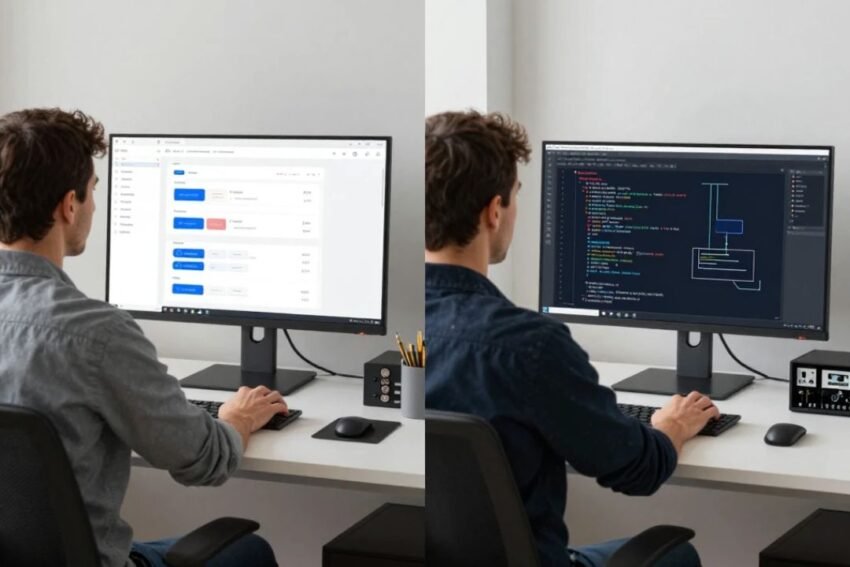
Web development is one of the fastest-growing fields in the technology industry. Every website and web application that people use daily depends on different types of development processes. Two of the most important areas of web development are Frontend Development and Backend Development.
Many beginners get confused about the difference between frontend and backend development. While both are connected, they focus on different parts of a website or application. Frontend development deals with what users see and interact with, while backend development manages the hidden systems that make websites function properly.
Understanding the difference between frontend and backend development helps beginners choose the right career path and learn the required skills.
This complete guide explains what frontend and backend development are, their technologies, responsibilities, differences, benefits, career opportunities, and how they work together.
What Is Frontend Development?
Frontend development is the process of creating the visible part of a website or application that users directly interact with.
Everything you see when visiting a website, such as layouts, colors, menus, buttons, images, and animations, is created through frontend development.
Frontend developers focus on creating websites that are:
- Attractive
- Fast
- Responsive
- User-friendly
- Easy to navigate
The main goal of frontend development is to provide a smooth and enjoyable user experience.
Responsibilities of Frontend Developers
Frontend developers handle many important tasks, including:
- Creating website layouts
- Developing user interfaces
- Making websites mobile-friendly
- Adding interactive features
- Improving website performance
- Testing browser compatibility
They work closely with designers and backend developers to create complete web experiences.
Frontend Development Technologies
Frontend developers use several programming languages and tools to create websites.
HTML
HTML (HyperText Markup Language) is the basic structure of every website.
It is used to create:
- Headings
- Paragraphs
- Images
- Links
- Forms
- Website sections
HTML tells the browser what content should appear on a webpage.
CSS
CSS (Cascading Style Sheets) controls the visual appearance of websites.
CSS is used for:
- Colors
- Fonts
- Spacing
- Layouts
- Animations
- Responsive designs
Without CSS, websites would look simple and unorganized.
JavaScript
JavaScript adds interactive functionality to websites.
It allows developers to create:
- Dynamic content
- Interactive menus
- Sliders
- Forms
- Real-time updates
JavaScript is one of the most important skills for modern frontend developers.
Frontend Frameworks and Libraries
Modern websites often use frameworks and libraries to improve development speed.
Popular frontend technologies include:
React
React is a popular JavaScript library used for creating fast and interactive user interfaces.
Angular
Angular is a complete framework used for building large-scale applications.
Vue.js
Vue.js is a lightweight framework known for simplicity and flexibility.
These tools help developers create powerful and efficient web applications.
What Is Backend Development?
Backend development focuses on the server-side part of websites and applications.
Unlike frontend development, backend systems are not directly visible to users. However, they are responsible for processing information and making websites work correctly.
Backend development manages:
- Servers
- Databases
- User authentication
- Application logic
- Data processing
- Security
For example, when you log into a website, the backend verifies your username and password before giving access.
Responsibilities of Backend Developers
Backend developers are responsible for:
- Building server systems
- Managing databases
- Creating APIs
- Protecting user data
- Handling website functionality
- Improving application performance
They ensure that websites work smoothly behind the scenes.
Backend Development Technologies
Backend developers use different programming languages and tools.
PHP
PHP is a popular backend language used for creating dynamic websites.
It is widely used for:
- Business websites
- Content management systems
- Web applications
Python
Python is a powerful programming language known for simplicity.
It is used for:
- Web development
- Automation
- Data processing
- Artificial intelligence projects
Popular Python frameworks include Django and Flask.
Node.js
Node.js allows developers to use JavaScript for backend development.
It is commonly used for building:
- Fast applications
- Real-time systems
- APIs
Java
Java is commonly used for large enterprise applications.
It provides:
- Security
- Stability
- High performance
Backend Databases
Databases are an important part of backend development.
They store and manage information such as:
- User accounts
- Product details
- Orders
- Website content
Popular databases include:
- MySQL
- PostgreSQL
- MongoDB
Backend developers create systems that allow websites to store and retrieve data efficiently.
Frontend vs Backend Development: Key Differences
Although frontend and backend development are connected, they have several differences.
User Interaction
Frontend development focuses on the part users see and interact with.
Backend development focuses on the systems users do not see.
Main Purpose
Frontend focuses on:
- Design
- User experience
- Website appearance
Backend focuses on:
- Functionality
- Data management
- Server operations
Programming Languages
Frontend commonly uses:
- HTML
- CSS
- JavaScript
Backend commonly uses:
- Python
- PHP
- Java
- Node.js
Tools and Technologies
Frontend developers use:
- Design tools
- Browser testing tools
- Frontend frameworks
Backend developers use:
- Servers
- Databases
- APIs
- Backend frameworks
How Frontend and Backend Work Together
Frontend and backend development work together to create complete websites and applications.
For example, in an online shopping website:
Frontend handles:
- Product pages
- Shopping cart design
- Checkout interface
Backend handles:
- Product database
- User accounts
- Payment processing
- Order management
Both sides are necessary for creating a successful web application.
What Is Full-Stack Development?
Full-stack development combines frontend and backend development skills.
A full-stack developer can handle:
- Website design
- Frontend coding
- Backend programming
- Database management
- Server configuration
Full-stack developers understand the complete process of building web applications.
Benefits of Learning Frontend Development
Frontend development offers many advantages.
Creative Work
Frontend developers work with designs, layouts, and user experiences.
High Demand
Businesses need skilled frontend developers to create modern websites.
Freelancing Opportunities
Frontend developers can build websites for clients worldwide.
Quick Results
Frontend changes are visible immediately, making learning more interactive.
Benefits of Learning Backend Development
Backend development also provides many opportunities.
Strong Career Growth
Backend developers are highly valued because they build important systems.
Advanced Programming Skills
Backend development improves problem-solving and programming abilities.
Work on Large Applications
Backend developers create systems used by thousands or millions of users.
Career Opportunities
Both frontend and backend development offer excellent career paths.
Frontend Career Roles
- Frontend Developer
- UI Developer
- Web Designer
- JavaScript Developer
Backend Career Roles
- Backend Developer
- Software Engineer
- Database Developer
- API Developer
Full-Stack Career Roles
- Full-Stack Developer
- Web Application Developer
Which Is Easier to Learn: Frontend or Backend?
For beginners, frontend development is usually easier because results are visible immediately.
Many beginners start with:
- HTML
- CSS
- JavaScript
After understanding frontend basics, they move toward backend development.
Backend development may require more advanced knowledge of:
- Programming logic
- Databases
- Servers
- Security
However, both fields require practice and continuous learning.
Frontend vs Backend: Which Career Is Better?
There is no single answer because both fields have strong opportunities.
Choose frontend development if you enjoy:
- Design
- Creativity
- User experience
- Visual work
Choose backend development if you enjoy:
- Programming logic
- Data management
- Problem-solving
- Building systems
Many developers eventually learn both and become full-stack developers.
Future of Frontend and Backend Development
Web development continues to evolve with new technologies.
Future trends include:
Artificial Intelligence Integration
AI tools are helping developers write code faster and improve productivity.
Better User Experiences
Frontend development will focus on faster and more personalized experiences.
Advanced Security
Backend development will focus more on protecting user data.
Cloud-Based Applications
More applications will use cloud technologies for better performance and scalability.
Frequently Asked Questions (FAQs)
What is frontend development?
Frontend development is the process of creating the visible parts of websites that users interact with.
What is backend development?
Backend development manages servers, databases, and the hidden functionality of websites.
Is frontend easier than backend?
Frontend is usually easier for beginners because changes are visible, but both require learning and practice.
Can I learn frontend and backend together?
Yes, learning both allows you to become a full-stack developer.
Which programming language is best for web development?
JavaScript is one of the most important languages because it can be used for both frontend and backend development.
Conclusion
Frontend and backend development are two essential parts of modern web development. Frontend development focuses on creating attractive and interactive user experiences, while backend development manages the systems, databases, and functionality that power websites.
Both fields offer excellent career opportunities and are important for creating successful web applications. Beginners can start with frontend basics and gradually learn backend technologies to become full-stack developers.
Whether you choose frontend, backend, or full-stack development, building strong fundamentals and practicing regularly are the keys to success in the technology industry.