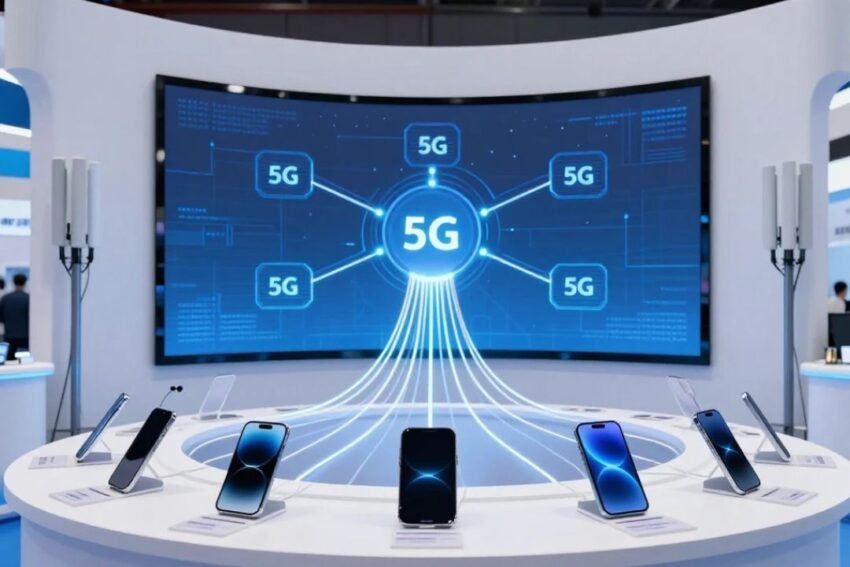
Mobile technology has changed the way people communicate, work, learn, and access information. From basic mobile networks used for calling and messaging to advanced wireless technologies that support smart devices and artificial intelligence, mobile connectivity has evolved significantly over the years.
One of the biggest advancements in mobile technology is 5G technology. It represents the latest generation of wireless communication and provides faster speeds, lower delays, and improved network performance compared to previous generations.
5G is not just an upgrade for smartphones. It is a technology that can transform industries, improve smart devices, support automation, and create new digital experiences.
This complete guide explains what 5G technology is, how it works, its benefits, applications, challenges, and how it is changing mobile connectivity in the modern world.
What Is 5G Technology?
5G stands for fifth-generation mobile network technology. It is the latest wireless communication standard designed to provide faster internet speeds, better connectivity, and improved network efficiency.
Previous mobile network generations include:
- 1G – Basic voice communication
- 2G – Digital calling and text messaging
- 3G – Mobile internet access
- 4G – High-speed internet and video streaming
- 5G – Advanced connectivity with ultra-fast speeds and low latency
5G technology is designed to support the growing demand for internet-connected devices and high-speed digital services.
How Does 5G Technology Work?
5G works by using advanced wireless technologies and improved network infrastructure.
Unlike previous networks, 5G uses a combination of different frequency bands:
Low-Band 5G
Low-band frequencies provide wide coverage and better signal penetration.
Benefits include:
- Large coverage areas
- Reliable connections
- Better indoor performance
However, speeds are usually lower compared to other 5G bands.
Mid-Band 5G
Mid-band 5G provides a balance between speed and coverage.
It offers:
- Faster speeds
- Good coverage
- Better overall performance
Many networks use mid-band frequencies for everyday 5G services.
High-Band 5G (mmWave)
High-band 5G provides extremely fast speeds but works over shorter distances.
It is useful for:
- Crowded areas
- Stadiums
- Business locations
- High-performance applications
Key Features of 5G Technology
5G introduces several improvements that make it different from previous mobile networks.
1. Faster Internet Speeds
One of the biggest advantages of 5G is its high-speed internet capability.
5G can provide significantly faster speeds compared to 4G networks.
Faster speeds allow users to:
- Download large files quickly
- Stream high-quality videos
- Play online games smoothly
- Use advanced applications
With 5G, mobile internet becomes closer to the experience of high-speed broadband connections.
2. Lower Latency
Latency refers to the time it takes for data to travel between devices and servers.
5G reduces latency significantly compared to older networks.
Low latency is important for:
- Online gaming
- Video communication
- Autonomous vehicles
- Remote operations
A faster response time creates smoother and more reliable digital experiences.
3. More Connected Devices
Modern cities contain millions of connected devices.
5G is designed to support a massive number of devices at the same time.
It enables better connectivity for:
- Smart homes
- Smart cities
- IoT devices
- Industrial systems
This makes 5G an important technology for the future of connected environments.
4. Improved Network Reliability
5G networks provide better stability and performance.
Users experience:
- Fewer connection problems
- Better signal quality
- Improved performance in crowded areas
This is especially useful in places where many people use mobile networks simultaneously.
How 5G Changes Mobile Connectivity
5G is changing mobile connectivity in many ways.
Better Smartphone Experience
Smartphones benefit greatly from 5G technology.
Users can enjoy:
- Faster browsing
- High-quality video streaming
- Faster app downloads
- Improved online gaming
Mobile applications can become more advanced because they can rely on faster and more reliable connections.
Improved Video Streaming
Video content has become one of the biggest users of internet bandwidth.
5G improves video experiences by supporting:
- 4K streaming
- Higher-quality video calls
- Faster loading times
Users can enjoy smoother entertainment experiences without buffering issues.
Enhanced Online Gaming
Online gaming requires fast response times and stable connections.
5G improves gaming by providing:
- Lower latency
- Faster data transfer
- Better multiplayer experiences
Cloud gaming services can also benefit from 5G because games can run on remote servers while streaming directly to devices.
5G and Internet of Things (IoT)
The Internet of Things refers to connected devices that communicate through the internet.
Examples include:
- Smart watches
- Smart home systems
- Connected vehicles
- Industrial sensors
5G provides the speed and capacity needed for large numbers of IoT devices to work together.
5G in Smart Homes
Smart homes use connected devices to improve convenience and security.
With 5G, smart devices can communicate faster.
Examples include:
- Smart security cameras
- Smart lighting
- Smart appliances
- Voice-controlled systems
Faster connectivity improves automation and reliability.
5G and Smart Cities
Smart cities use technology to improve urban services.
5G supports smart city systems such as:
- Traffic management
- Smart transportation
- Public safety systems
- Energy management
With better connectivity, cities can become more efficient and connected.
5G in Healthcare
Healthcare is another industry that can benefit from 5G technology.
Possible applications include:
- Remote patient monitoring
- Telemedicine
- Connected medical devices
- Remote healthcare services
Low latency and reliable connections can improve communication between doctors and patients.
5G in Business and Industry
Businesses use 5G to improve productivity and automation.
Industries can benefit through:
- Smart factories
- Automated machines
- Real-time monitoring
- Advanced robotics
5G allows businesses to create more efficient and connected operations.
5G and Autonomous Vehicles
Self-driving vehicles require fast communication between vehicles, sensors, and infrastructure.
5G helps support:
- Real-time data exchange
- Traffic communication
- Vehicle safety systems
Low latency is essential for applications where quick decisions are required.
Advantages of 5G Technology
5G provides many benefits compared to previous mobile networks.
Faster Communication
Users can transfer data quickly and access online services without delays.
Better User Experience
Improved speed and reliability create smoother digital experiences.
Support for Innovation
5G enables new technologies such as AI, IoT, and automation.
Improved Business Opportunities
Companies can develop new services using advanced connectivity.
More Efficient Networks
5G can manage more devices with better performance.
Challenges of 5G Technology
Although 5G offers many benefits, there are also challenges.
Infrastructure Requirements
5G requires new network equipment and infrastructure.
Mobile operators need to install:
- New antennas
- Advanced network systems
- More transmission points
This process requires significant investment.
Limited Coverage in Some Areas
High-frequency 5G signals have shorter ranges.
This means some areas may experience limited coverage, especially rural locations.
Device Compatibility
Users need 5G-compatible devices to access 5G networks.
Older smartphones cannot use 5G services.
Security Concerns
As more devices connect to networks, security becomes increasingly important.
5G networks require strong protection against:
- Cyber attacks
- Data theft
- Unauthorized access
Difference Between 4G and 5G
Speed
4G provides fast mobile internet, but 5G offers much higher speeds.
Latency
5G provides lower latency, making responses faster.
Device Support
5G supports a larger number of connected devices.
Technology
5G uses advanced network technologies for better performance.
Future of 5G Technology
The future of 5G looks promising as more industries adopt advanced connectivity.
Future developments may include:
- More smart cities
- Advanced AI applications
- Better automation
- Improved virtual reality experiences
- Connected transportation systems
5G will continue to support digital transformation across different industries.
Frequently Asked Questions (FAQs)
What is 5G technology?
5G is the fifth generation of mobile network technology designed to provide faster speeds, lower latency, and improved connectivity.
Is 5G faster than 4G?
Yes, 5G can provide significantly faster speeds and better network performance compared to 4G.
Does 5G improve smartphone performance?
Yes, 5G improves internet speed, streaming quality, gaming performance, and app experiences.
Is 5G safe?
Current research indicates that 5G networks operate within established safety standards. Like other wireless technologies, networks are regulated to meet safety requirements.
What devices use 5G?
Many modern smartphones, tablets, routers, and IoT devices support 5G connectivity.
Conclusion
5G technology is changing the way people connect, communicate, and use digital services. With faster speeds, lower latency, and support for millions of connected devices, 5G is creating new possibilities for smartphones, businesses, smart cities, healthcare, and future technologies.
Although challenges such as infrastructure costs and coverage limitations remain, 5G continues to expand and improve mobile connectivity worldwide.
As technology advances, 5G will become an important foundation for the next generation of digital innovation and connected experiences.