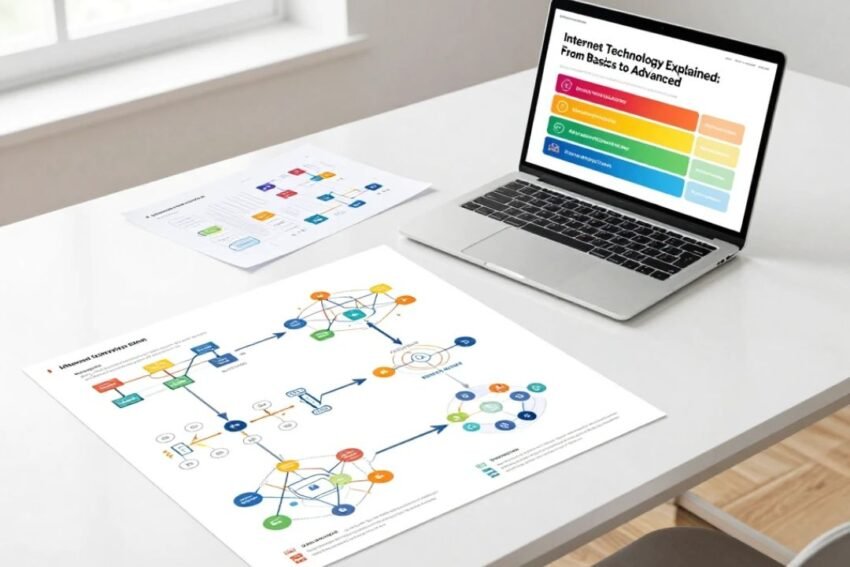
The internet has become one of the most important technologies in modern life. It connects billions of people around the world and allows them to communicate, work, learn, shop, and access information instantly.
From sending emails and browsing websites to using cloud applications, streaming videos, and managing smart devices, almost every digital activity depends on internet technology.
Internet technology is not just about connecting computers. It includes a combination of hardware, software, networking systems, communication protocols, data centers, cybersecurity solutions, and advanced technologies that make global connectivity possible.
This complete guide explains internet technology from basic concepts to advanced systems, including how the internet works, its components, benefits, challenges, and future trends.
What Is Internet Technology?
Internet technology refers to the collection of technologies, systems, and processes that allow computers, smartphones, servers, and other devices to connect and exchange information through the internet.
It includes:
- Network infrastructure
- Web technologies
- Communication protocols
- Cloud computing
- Cybersecurity systems
- Wireless connectivity
- Data management
Internet technology allows users to access digital services from anywhere in the world.
How Does the Internet Work?
The internet is a global network of connected devices. When a user accesses a website or online service, multiple technologies work together to deliver information.
The basic process includes:
- A user sends a request through a device.
- The request travels through an internet connection.
- Internet service providers route the request.
- Servers process the request.
- Information is returned to the user’s device.
This entire process happens within seconds.
Basic Components of Internet Technology
The internet depends on several important components.
1. Network Infrastructure
Network infrastructure is the physical foundation of the internet.
It includes:
- Fiber optic cables
- Routers
- Switches
- Data centers
- Wireless towers
- Servers
These components allow information to travel between different locations.
2. Internet Service Providers (ISPs)
Internet Service Providers connect users to the internet.
Examples of services provided by ISPs include:
- Home internet connections
- Mobile data services
- Business networks
ISPs manage the connection between users and the global internet system.
3. Servers and Data Centers
Servers store and process online information.
Every website, application, and online platform depends on servers.
Data centers contain thousands of servers that handle:
- Website data
- User information
- Cloud services
- Online applications
4. IP Addresses
Every device connected to the internet has an IP address.
An IP address works like a digital identity that allows devices to communicate.
Types of IP addresses include:
- IPv4
- IPv6
IPv6 was developed to support the growing number of internet-connected devices.
5. Domain Names
Domain names make websites easier to access.
Instead of remembering complicated IP addresses, users can type simple website names.
Examples:
- Website addresses
- Business domains
- Online platforms
The Domain Name System (DNS) converts domain names into IP addresses.
Internet Protocols Explained
Protocols are rules that allow devices to communicate properly.
TCP/IP Protocol
TCP/IP is the foundation of internet communication.
It controls how data is:
- Broken into packets
- Sent across networks
- Received correctly
Almost every internet service depends on TCP/IP.
HTTP and HTTPS
HTTP is used for transferring information between web browsers and websites.
HTTPS is the secure version that protects data through encryption.
HTTPS helps protect:
- Passwords
- Payment information
- Personal data
FTP Protocol
File Transfer Protocol allows users to transfer files between computers and servers.
It is commonly used for:
- Website management
- File sharing
- Server updates
Web Technology and Internet Services
The internet provides many services that people use daily.
Websites and Web Applications
Websites provide information and services through browsers.
Modern websites use technologies such as:
- HTML
- CSS
- JavaScript
- Databases
Web applications provide interactive experiences like online banking, shopping, and social media.
Search Engines
Search engines help users find information online.
They use advanced algorithms to:
- Crawl websites
- Analyze content
- Provide relevant results
Search technology continues improving with artificial intelligence.
Email Communication
Email is one of the oldest and most widely used internet services.
It allows users to:
- Send messages
- Share documents
- Communicate globally
Modern email platforms include advanced security and automation features.
Cloud Computing and Internet Technology
Cloud computing is an important part of modern internet technology.
Instead of storing data only on personal devices, users can access information through online servers.
Cloud services provide:
- Online storage
- Software applications
- Data processing
- Business solutions
Examples include cloud-based tools for:
- File management
- Collaboration
- Software development
Mobile Internet Technology
Mobile internet has changed how people access online services.
Modern mobile internet technologies include:
- 4G networks
- 5G connectivity
- Mobile applications
- Wireless communication
Mobile technology allows users to stay connected anywhere.
5G and the Future of Connectivity
5G is a major advancement in internet technology.
It provides:
- Faster speeds
- Lower delay
- Better device connectivity
5G supports:
- Smart cities
- Autonomous vehicles
- IoT devices
- Advanced applications
Internet of Things (IoT)
The Internet of Things connects everyday devices to the internet.
Examples include:
- Smart home devices
- Wearable technology
- Connected vehicles
- Industrial sensors
IoT allows devices to collect data and communicate automatically.
Artificial Intelligence and Internet Technology
Artificial intelligence is improving internet services in many ways.
AI helps with:
- Search results
- Recommendations
- Cybersecurity
- Automation
- Data analysis
Many online platforms use AI to provide personalized experiences.
Advanced Networking Technologies
Modern internet systems use advanced networking solutions.
Fiber Optic Internet
Fiber optic technology uses light signals to transmit data.
Advantages include:
- High speed
- Reliable connections
- Low latency
Fiber internet is becoming a preferred choice for high-performance connectivity.
Wireless Networking
Wireless technology allows devices to connect without physical cables.
Examples include:
- Wi-Fi
- Bluetooth
- Mobile networks
Wireless networks provide flexibility and convenience.
Edge Computing
Edge computing processes data closer to where it is generated.
Benefits include:
- Faster response times
- Reduced network traffic
- Better performance
It is important for applications requiring instant data processing.
Benefits of Internet Technology
Internet technology provides many advantages.
Global Communication
The internet allows people to communicate instantly across the world.
Examples include:
- Video calls
- Messaging platforms
- Online meetings
Easy Access to Information
Users can access:
- Educational resources
- News
- Research materials
- Digital services
The internet has made information more accessible.
Online Business Growth
Internet technology helps businesses:
- Reach global customers
- Sell products online
- Improve marketing
- Automate operations
Digital businesses depend heavily on internet infrastructure.
Remote Work and Learning
The internet enables:
- Online education
- Remote jobs
- Digital collaboration
People can work and study from almost anywhere.
Entertainment and Media
Internet technology has transformed entertainment.
Popular online services include:
- Video streaming
- Online gaming
- Music platforms
- Digital content
Challenges of Internet Technology
Although the internet provides many benefits, it also creates challenges.
Cybersecurity Threats
Online systems face threats such as:
- Malware
- Phishing attacks
- Data breaches
- Unauthorized access
Strong security practices are necessary to protect information.
Privacy Concerns
Internet services collect large amounts of user data.
Important privacy concerns include:
- Data tracking
- Personal information collection
- Online monitoring
Users should understand privacy settings and security options.
Digital Divide
Not everyone has equal access to high-speed internet.
Factors include:
- Location
- Infrastructure
- Cost
Improving internet accessibility remains an important global goal.
Future Trends in Internet Technology
The future of internet technology will continue to evolve.
Important trends include:
Artificial Intelligence-Powered Internet
AI will improve:
- Search systems
- Online services
- Automation
- Personalization
Faster Connectivity
Future networks will provide:
- Higher speeds
- Lower latency
- Better reliability
Smart Cities
Internet technology will support smart cities through:
- Connected transportation
- Smart energy systems
- Automated services
Advanced Cybersecurity
Future internet systems will require stronger security solutions.
AI-based security systems will help detect and prevent threats.
Satellite Internet
Satellite technology is expanding internet access to remote areas.
It can provide connectivity where traditional infrastructure is difficult to build.
How to Stay Safe Online
Users should follow good internet security practices.
Important steps include:
- Use strong passwords
- Enable two-factor authentication
- Avoid suspicious links
- Keep software updated
- Use secure networks
Frequently Asked Questions (FAQs)
What is internet technology?
Internet technology includes the hardware, software, networks, and systems that allow devices to communicate online.
How does the internet work?
The internet works by transferring data between connected devices using networks, servers, and communication protocols.
What technologies power the internet?
Major technologies include TCP/IP, cloud computing, fiber networks, wireless communication, and cybersecurity systems.
Why is internet technology important?
Internet technology improves communication, education, business, entertainment, and access to information.
What is the future of internet technology?
The future includes AI-powered services, faster networks, IoT growth, and advanced connectivity solutions.
Conclusion
Internet technology has transformed the modern world by connecting people, businesses, and devices globally. From basic web browsing to advanced cloud computing, artificial intelligence, and IoT systems, the internet continues to evolve rapidly.
Understanding internet technology helps individuals and businesses make better use of digital tools and prepare for future innovations.
As connectivity improves, the internet will become even more powerful, intelligent, and essential in everyday life. The future of internet technology will create a more connected world where information, communication, and digital services are faster and more accessible than ever before.